
Tree growing and planting activities conducted between 9 and 17 December 2025 have helped rehabilitate degraded forests and landscapes across several regions of the country, supporting President William Ruto’s 15 Billion Tree Growing Program.
The exercise covered parts of the Eastern, North Eastern and Coast Conservancies, targeting forest restoration, agroforestry promotion and climate change mitigation.
Counties covered in the exercise
The activities were carried out in Meru, Machakos, Kitui, Embu, Makueni, Tharaka Nithi, Garissa, Kilifi and Lamu counties.
The initiative focused on restoring degraded landscapes, strengthening forest cover and promoting sustainable land use practices at the community level.
Eastern Conservancy interventions
In the Eastern Conservancy, tree planting was conducted in forest stations, government institutions, schools, churches, farms and community lands.

Key interventions included compound planting at government residences, establishment of woodlots and boundary planting, rehabilitation of riverlines and roadsides, promotion of agroforestry, establishment of fruit orchards and enrichment planting within forest blocks.
North Eastern Conservancy efforts
In the North Eastern Conservancy, planting activities were undertaken in Garissa County, notably at Tetu Secondary School farm and Garissa University Memorial Park.
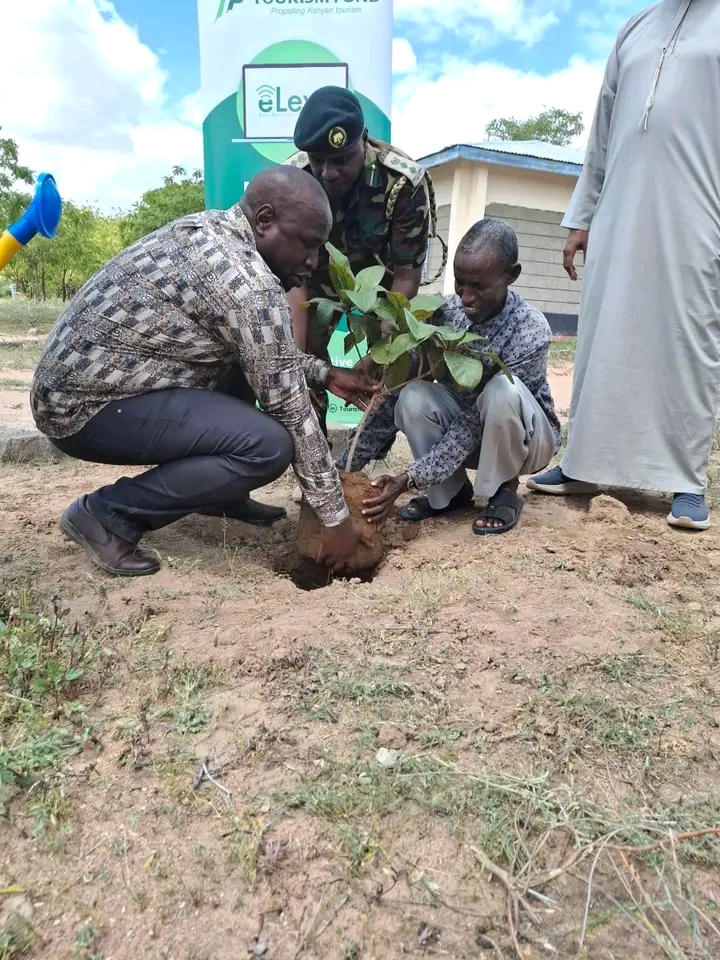
The approach prioritised rehabilitation of degraded land and commemorative tree planting, using indigenous and climate-resilient species such as Neem, Tropical Almond, Sycamore Fig and Sausage Tree.
The exercise was carried out through partnerships involving the Kenya Forest Service, Tourism Fund officials, school management teams, university leadership and county forest officers.
Mangrove restoration at the Coast
In the Coast Conservancy, large-scale mangrove restoration and enrichment planting were implemented in Kilifi and Lamu counties.
At the Sabaki River Estuary in Kilifi County, mangrove species including Avicennia marina, Rhizophora mucronata, Bruguiera gymnorhiza and Ceriops tagal were planted to restore degraded estuarine ecosystems.
In Lamu West Sub-County, enrichment and new planting of Ceriops tagal propagules were carried out at Mawambwe and Kijuni sites through partnerships involving the Kenya Forest Service, Sheldrick Wildlife Trust, Community Forest Associations, county governments and local communities.
Impact and national commitment
Tree planting activities has contributed to increasing forest cover, rehabilitating degraded ecosystems, enhancing community livelihoods, and strengthening climate change mitigation efforts.
The initiatives underscore Kenya’s continued commitment to environmental conservation and sustainable development under the 15 Billion Tree Growing Programme.









Leave a Reply