
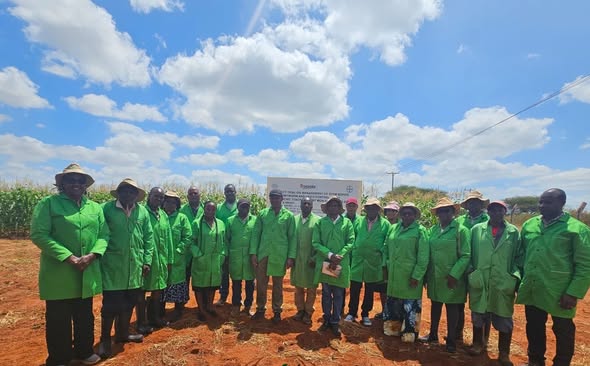
The National Biosafety Authority (NBA) has organized targeted capacity-building training for the members of the Institutional Biosafety Committee (IBC) of the Kenya Agricultural and Livestock Research Organization (KALRO) in an effort to strengthen the oversight of biotechnology research involving genetically modified organisms (GMOs).
The training course was designed to strengthen the internal biosafety structures of KALRO such that biotechnology research will be undertaken in a responsible and compliant manner, entirely driven by the science. It is part of the continuous effort to align institutional research to national laws and international biosafety standards.
KALRO Reaffirms Commitment to Biosafety Compliance
Delivering his address during the workshop training, KALRO IBC Chair Dr Martin Mwirigi stated that indeed the organization has never wavered from biotechnology research that is to be done according to the regulations in totality. He stated that the capacity building is key in strengthening KALRO’s biosafety systems while ensuring adherence to national legislation and global best practices.
In an explanation by Dr. Mwirigi, the training was designed to bolster the committee’s capacity to evaluate, approve, and supervise activities on biosafety according to the provisions of the Biosafety Act (CAP320), relevant regulation and pertinent international treaties including the Cartagena Protocol on Biosafety.

The programme also clarified institutional roles, reporting lines, and operational procedures necessary for effective IBC functioning. Photo/Courtesy
Building Skills in Risk Assessment and Monitoring
According to Dr Mwirigi, capacity building imparted essential biosafety principles knowledge of modern biotechnology and genetically modified organisms to the participants. Moreover, it imparted practical skills in critical areas such as risk assessment, monitoring, reporting, and effective communication about biosafety.
Moreover, the training clarified the institutional roles, reporting structures, and operational procedures relevant to the effective functioning of the educational Institution’s Biosafety Committee, thereby strengthening accountability and coordination within KALRO.
NBA Highlights Role of Institutional Biosafety Committees
According to Nehemiah Ngetich, Chief Executive Officer of NBA, institutional biosafety committees are critical in the national biosafety system framework of the country. Well-functioning IBCs play an important role in advancing compliance with all regulations and enhance the quality of applications submitted to the Authority while ensuring protection of human health and environment.
He added that such mechanisms of institution strengthening towards oversight will enhance the safety and responsible advancement of biotechnology research in the country.
Public Communication and Impactful Research Activities
Dr Murage praised that effective communication of the public to understand the relevance of biosafety governance would be important. Besides, she pointed out that every research work to be reviewed by IBC meets biosafety status as well as impacts wise.
Murage restated the commitment of KALRO management to support work done by the Institutional Biosafety Committee and joined committee members on their visit to Kiboko Weed and Pest Confined Field Trial (CFT) site as part of the program.
Strengthening Collaboration for Safe Biotechnology Development
This initiative will certainly create a stronger, well-equipped Institutional Biosafety Committee that can efficiently be tasked with reviewing biosafety applications and will aim to enhance coordination and collaboration between KALRO and the NBA to further reinforce Kenya’s commitments to safe, responsible and well-regulated biotechnology development.













Leave a Reply