
This rise of 30,714 candidates underscores the continued expansion of access to secondary education nationwide.Of the total candidates, 492,012 were male (49.54%) and 501,214 were female (50.46%). This marks the second consecutive year since the inception of the KCSE that female candidates have outnumbered their male counterparts, reflecting significant strides toward gender balance in education.
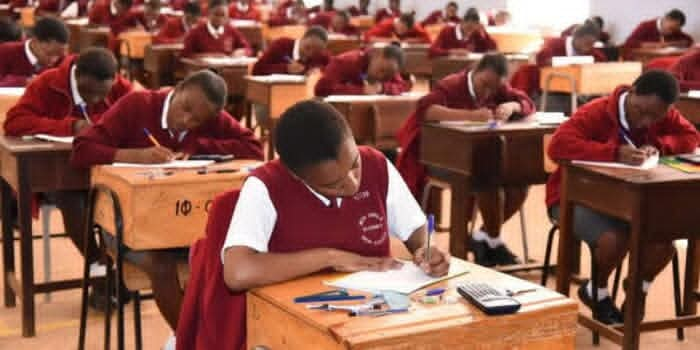
Nevertheless, disparities remain in certain counties. Ten counties recorded a higher number of male candidates, with Garissa leading at 66.24% male to 33.76% female, followed by Mandera (65.09% to 34.91%), Wajir (61.10% to 39.90%), Turkana (57.67% to 42.33%), and Narok (53.1% to 46.90%). Samburu recorded 52.43% male to 47.57% female.
In contrast, fourteen counties had more female candidates, led by Vihiga at 55.9% female to 44.10% male, Elgeyo Marakwet (55.06% to 44.94%), Kisumu (53.87% to 46.14%), and Kiambu (53.23% to 46.77%). Twenty-three counties demonstrated near-perfect gender parity, including Lamu, Marsabit, Embu, Laikipia, Kisii, Baringo, Nandi, Kajiado, Migori, Trans Nzoia, Taita Taveta, Kericho, Siaya, Kilifi, Bomet, Nyeri, Nyandarua, Murang’a, Nakuru, Kirinyaga, Bungoma, and Makueni.
Age distribution among candidates showed an increase in younger candidates (16 years and below), rising from 20,546 (2.13%) in 2024 to 26,391 (2.65%) in 2025. The majority of candidates, 716,048 (72.02%), fell within the appropriate age bracket of 17 to 19 years.
Regarding academic performance, 17 subjects recorded significant improvement, consistent with the previous year, while 11 subjects showed a decline compared to 10 in 2024. Female candidates performed better in subjects such as English, Kiswahili, Kenya Sign Language, Home Science, CRE, and Arts and Design.
Male candidates recorded stronger results in Mathematics, Alternative A and B Biology, Chemistry, General Science, History and Government, Geography, IRE, Building and Construction, and Business Studies. Performance was comparable between male and female candidates in Physics, Agriculture, Computer Studies, French, German, Arabic, and Music.
The 2025 KCSE results reflect both progress in gender representation and persistent subject-specific performance trends, highlighting areas where targeted interventions can further strengthen Kenya’s education outcomes.








Leave a Reply